Summary
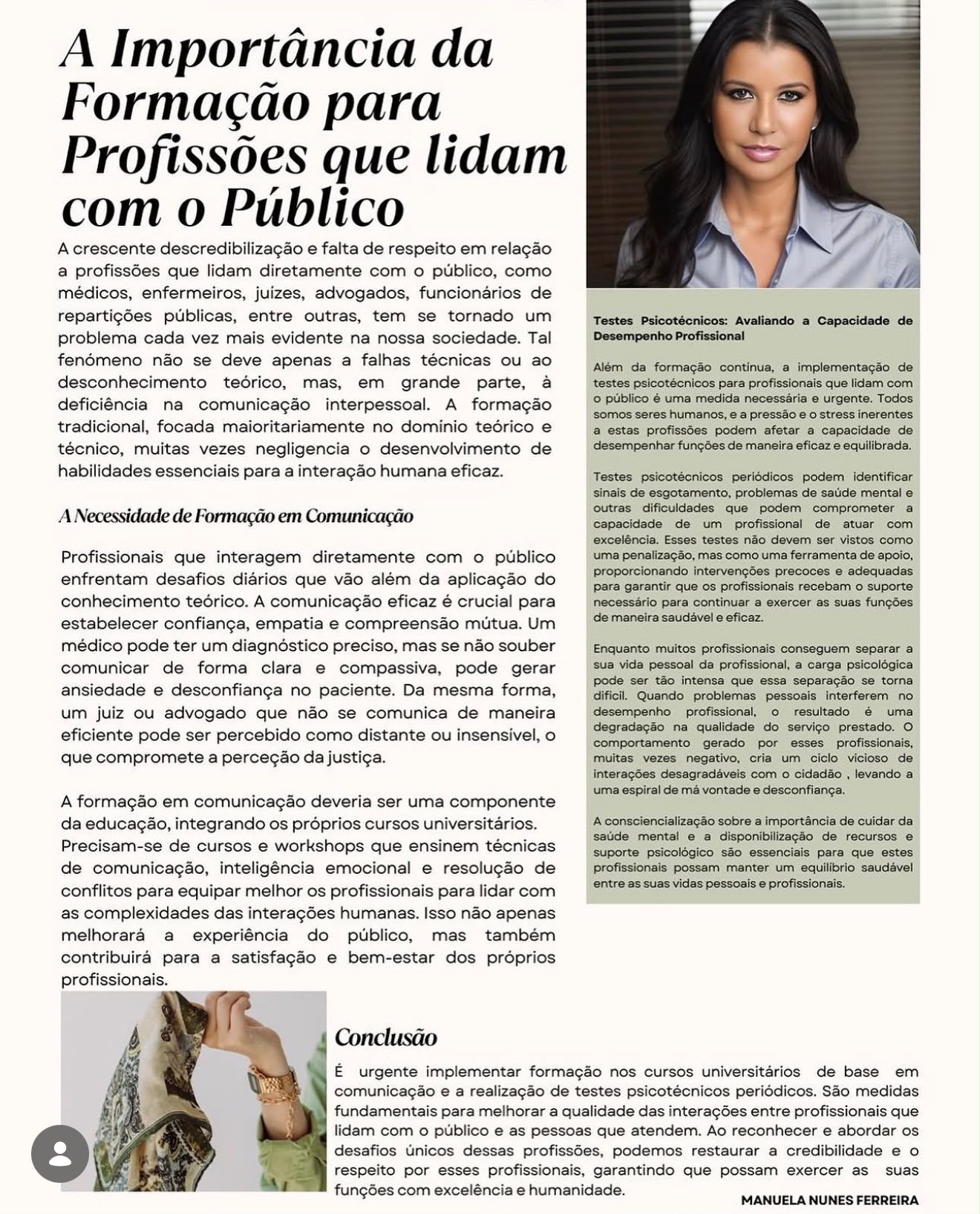
In "The Importance of Training for Professions Dealing with the Public," the author argues that technical knowledge alone is not sufficient for doctors, nurses, judges, lawyers, and other professionals. She identifies poor interpersonal communication as part of the problem and explains that clear and compassionate communication helps to create trust and understanding; when it is lacking, it can increase anxiety and compromise the relationship with patients and citizens.
The same article proposes including communication skills, emotional intelligence, and conflict resolution training in university and professional curricula. It also advocates for periodic psychometric tests as a tool to identify signs of burnout and other difficulties, with appropriate interventions—not as punishment. The conclusion relates these measures to the quality of interactions and the well-being of those providing and receiving the service.
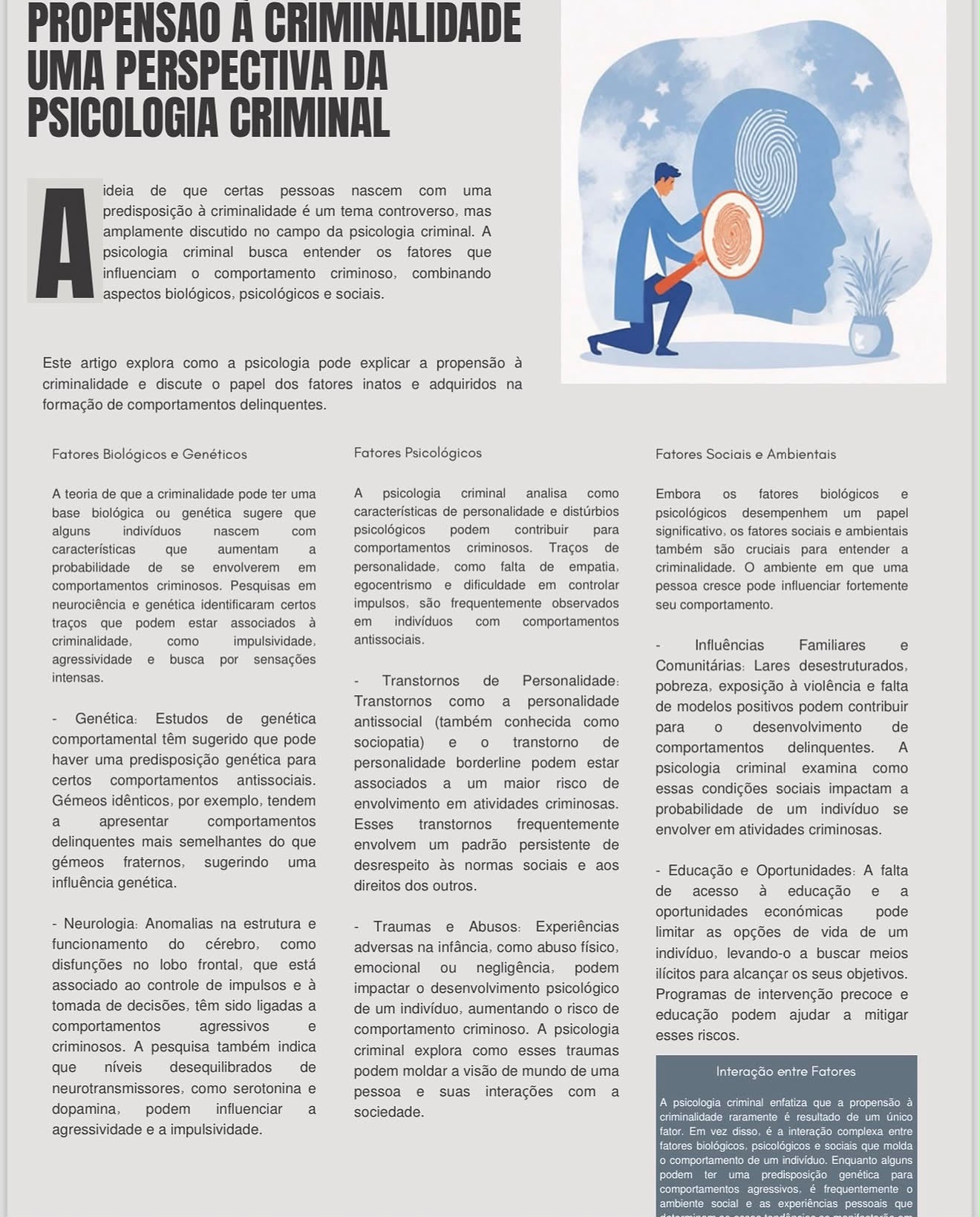
“Criminal propensity: a perspective from criminal psychology” discusses the hypothesis that biological, psychological, and social factors influence criminal behavior. The text addresses genetic and neurological predispositions, personality traits and psychological disorders, trauma, family violence, poverty, education, and opportunities. It emphasizes that crime is rarely explained by a single factor and describes an interaction between individual characteristics and the environment; it is a general reflection, not an evaluation of any individual or specific case.
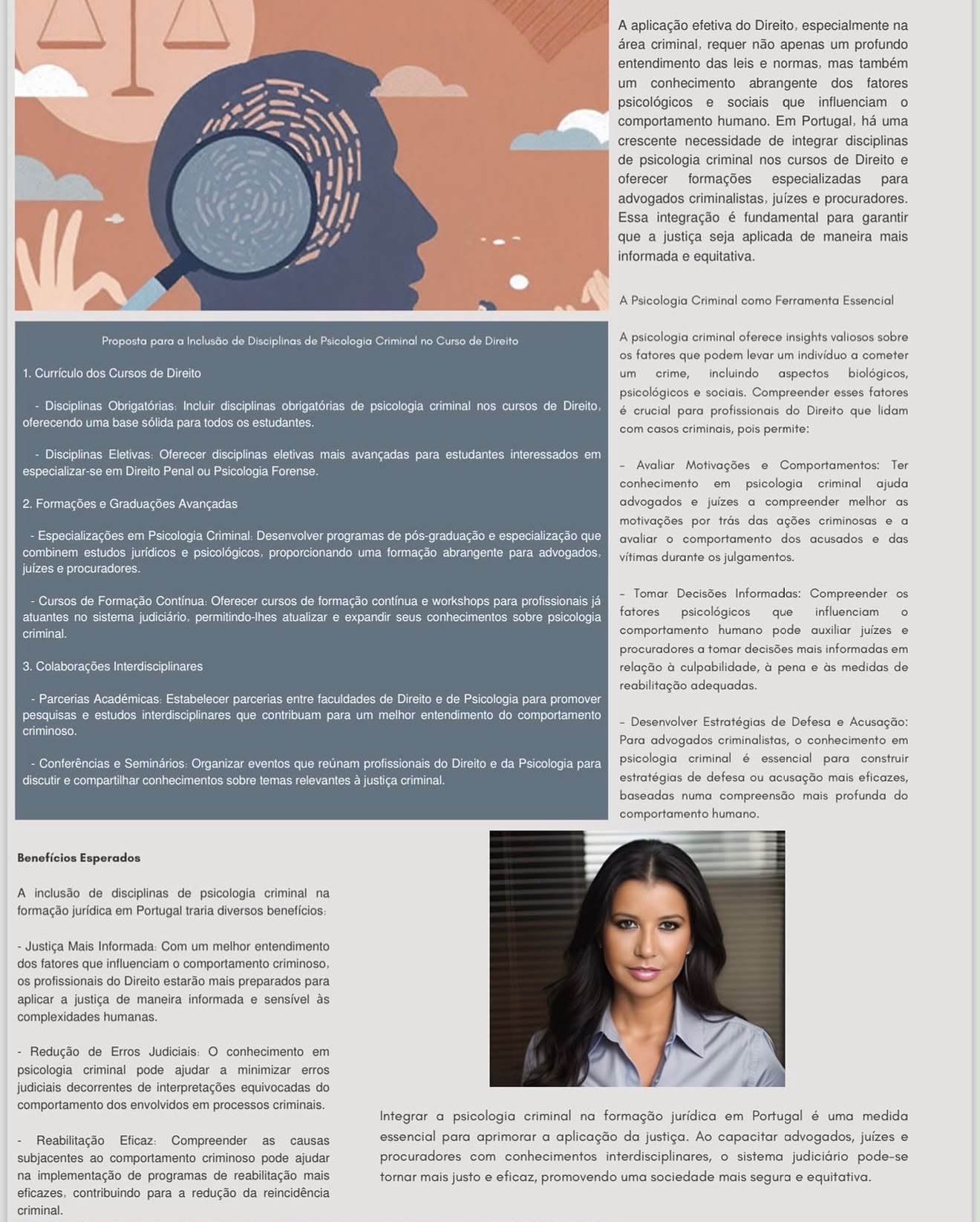
In the article on the inclusion of criminal psychology in legal education, the author proposes mandatory and optional courses in law, specializations, and continuing education for legal professionals. She also suggests partnerships between law and psychology faculties and the organization of conferences and seminars. The stated objective is to broaden understanding of motivations and behaviors, support more informed decisions, and develop interdisciplinary defense and prosecution strategies.
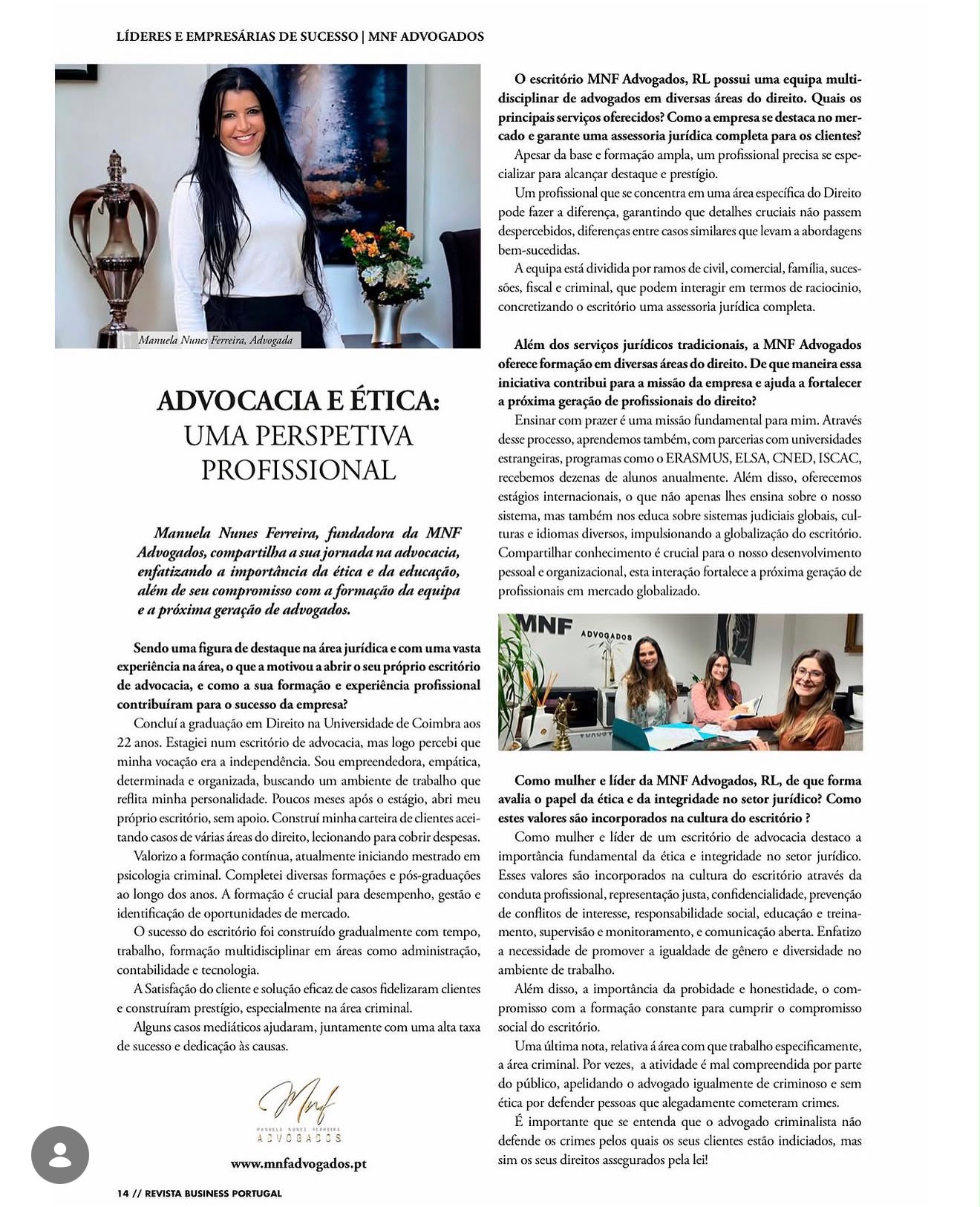
In the interview “Lawyering and Ethics: a professional perspective,” Manuela Nunes Ferreira recounts the creation of MNF Advogados and associates the development of the firm with continuing education, multidisciplinary work, and client satisfaction. When discussing leadership, she highlights ethics, integrity, confidentiality, conflict of interest prevention, social responsibility, supervision, and open communication. In the context of criminal law, she clarifies that defending the rights of a person accused does not mean approving the crimes they are accused of: it means upholding the rights that the law grants them.
Excerpts from publications