Summary
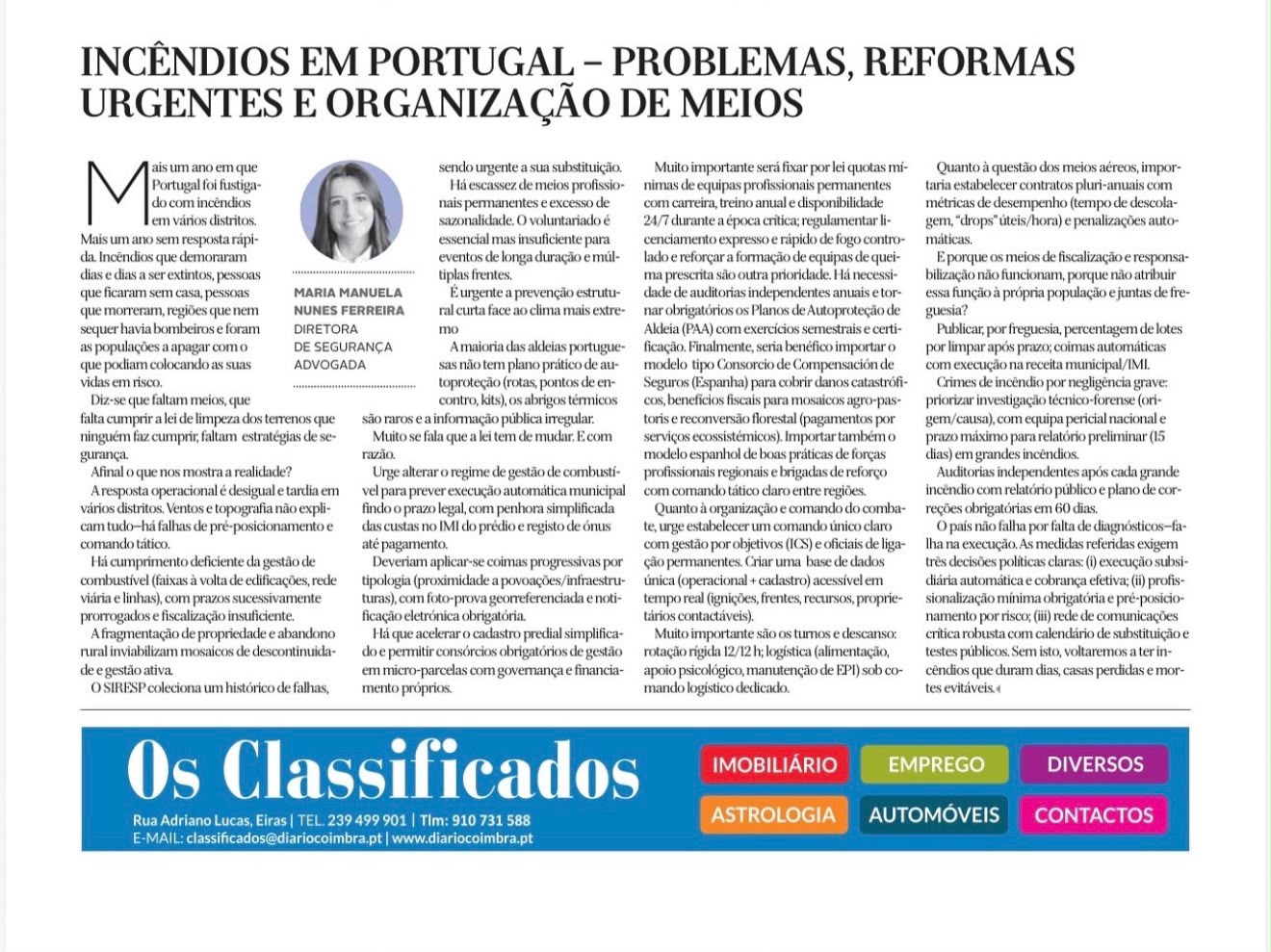
In "Fires in Portugal – Problems, Urgent Reforms and Organization of Resources," Manuela Nunes Ferreira questions why fires that last for days receive a late and unequal response. The article points to failures in land clearing and prevention, insufficient oversight, poor management of wildfire fuel, and difficulties in pre-positioning and command. It also draws attention to the fragmentation of rural property, abandonment, and the lack of practical self-protection plans in many villages.
The author proposes measures for prevention and response: municipal implementation of wildfire fuel management when necessary, simplified property registration, joint management of parcels, permanent professional teams and seasonal reinforcements, training and certification. For combating fires, she recommends a single command with clear objectives, an updated operational database, independent audits, and regular exercises. She also proposes funding and compensation for agro-pastoral mosaics and forest management, as well as contracts with performance metrics for aerial resources.
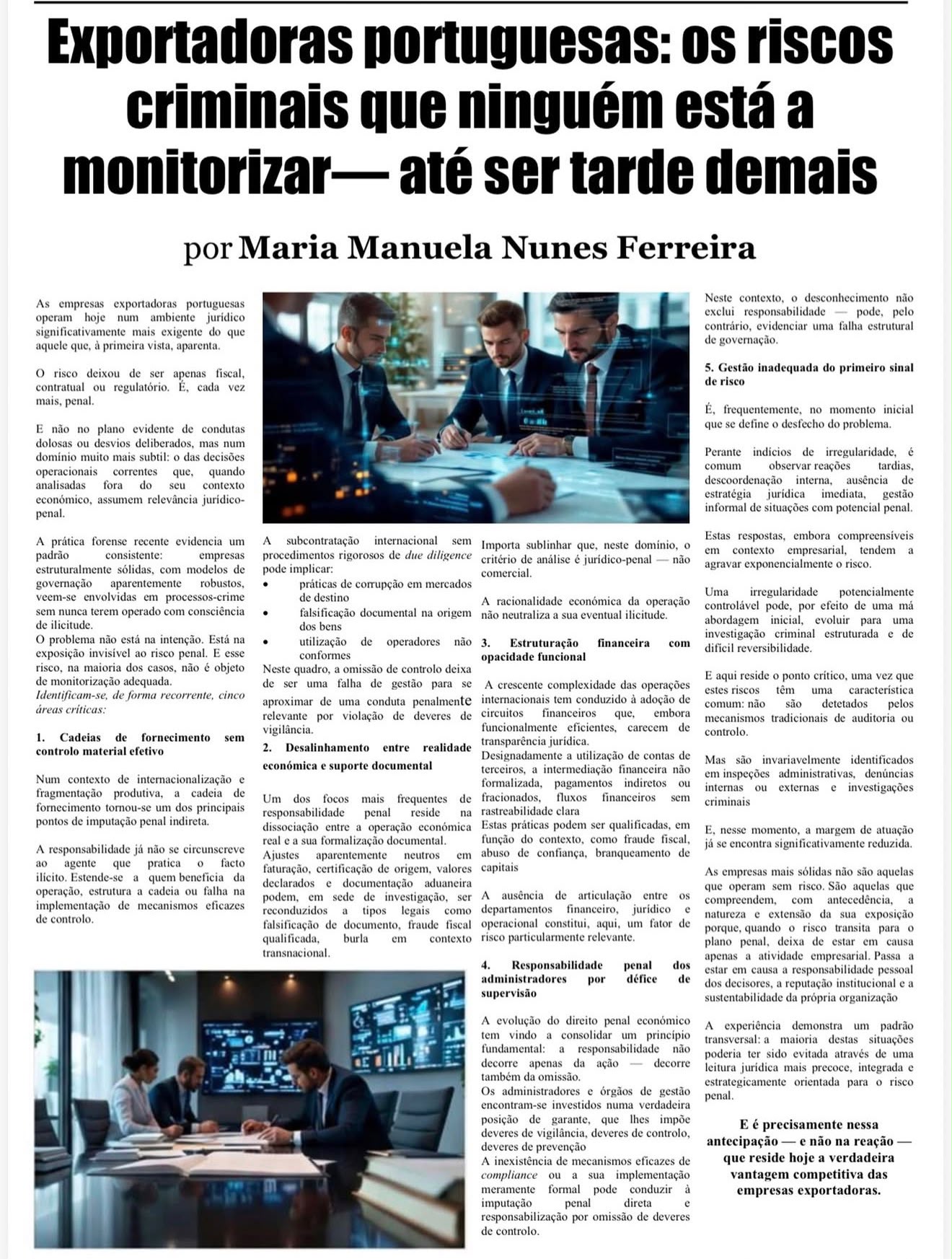
In "Portuguese Exporters: Criminal Risks That No One Is Monitoring – Until It's Too Late," the argument is that criminal exposure can arise in apparently normal business operations, without obvious criminal intent. The article organizes the risk into five areas: supply chains without effective control; misalignment between economic operations and documentation; opaque financial structures; failures of oversight by directors; and inadequate response when the first sign of risk appears.
Examples include international subcontracting without due diligence, inconsistent documents of origin or invoices, the use of intermediaries, and indirect payments without traceability. Depending on the circumstances, these situations can raise issues such as tax fraud, abuse of trust, money laundering, or corruption. The text emphasizes that the analysis concerns criminal law as well as commercial considerations: the economic rationality of the operation, by itself, does not eliminate any illegality.
The recommendation to exporters is to anticipate the analysis, integrate financial, legal, and operational areas, and maintain real control and supervision mechanisms. A late or informal response to an irregularity can make it difficult to reverse the situation and exacerbate the exposure of the organization and its decision-makers. The articles address different problems, but both advocate for concrete preparation, clear responsibilities, and action before risks become damages.
Excerpts from publications