Summary
In the article on health management and policies, the author links the difficulties of the National Health Service to chronic underfunding, bureaucracy, and a lack of strategic vision. She also questions the instability associated with ministerial turnover and the politicization of hospital appointments. As a response, she advocates for better working conditions, modernization of training and recruitment, and more efficient and patient-centred resource management.
Articles on medical training and errors in care address related, but distinct, issues. One questions whether excessively theoretical training prepares doctors for clinical practice and humanized care, pointing to poor conditions in medical residency programmes and insufficient supervision. The other reports concern over deaths in emergency departments and inadequate care for terminally ill patients and the elderly, associating these situations with staff overload, lack of resources, and poor communication with families. The text also proposes considering emotional and psychological competencies in the selection and preparation of future doctors.
In "The State of Medicine in Portugal," the shortage of doctors in public hospitals is linked to heavy workloads and the departure of professionals to the private sector, where they find more attractive conditions and remuneration. The article adds to this the aging of the medical profession, the lack of adequate replacement, the limited number of places in courses, and the lengthy public recruitment procedures. While it also mentions the closure of maternity hospitals among the issues being debated, the main focus remains on the factors associated with the lack of doctors.
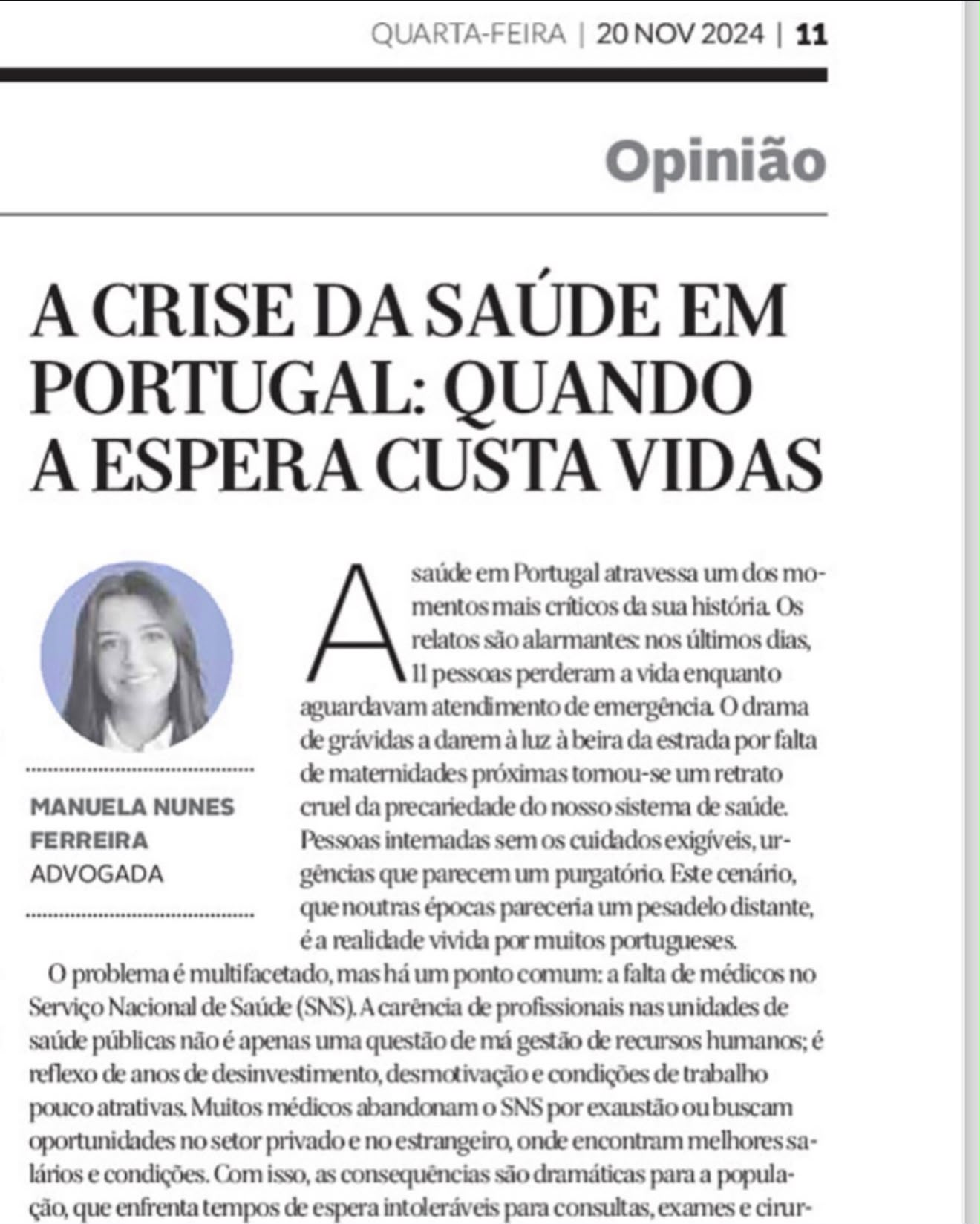
The article "The Health Crisis in Portugal: When Waiting Costs Lives" describes the severity of waiting times for urgent care and the lack of nearby maternity hospitals, citing cases of people dying while waiting for care and pregnant women giving birth on the side of the road. The author frames these episodes as signs of the precariousness of the SNS and reiterates the lack of professionals, accumulated underinvestment, and unattractive working conditions, which lead doctors to seek opportunities in the private sector or abroad.
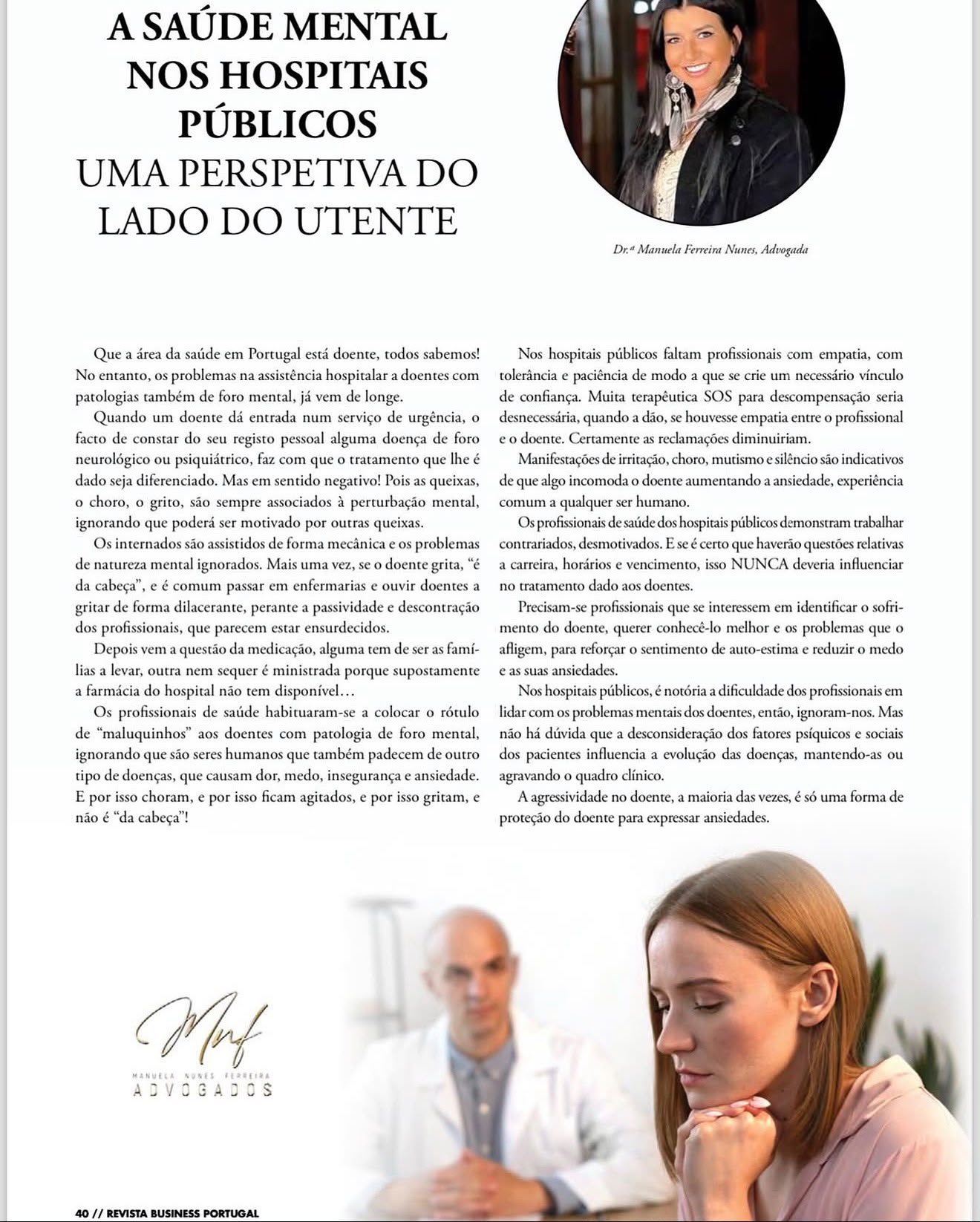
From the patient's perspective, the text on mental health in public hospitals criticizes the mechanical care of patients and the devaluation of complaints that can be automatically attributed to mental illness. It reports difficulties with medication and argues that listening to each person, investigating their suffering, and considering physical, psychological, and social factors can improve care. The author observes that irritation, crying, silence, or aggression can express anxiety or suffering and should not be ignored.
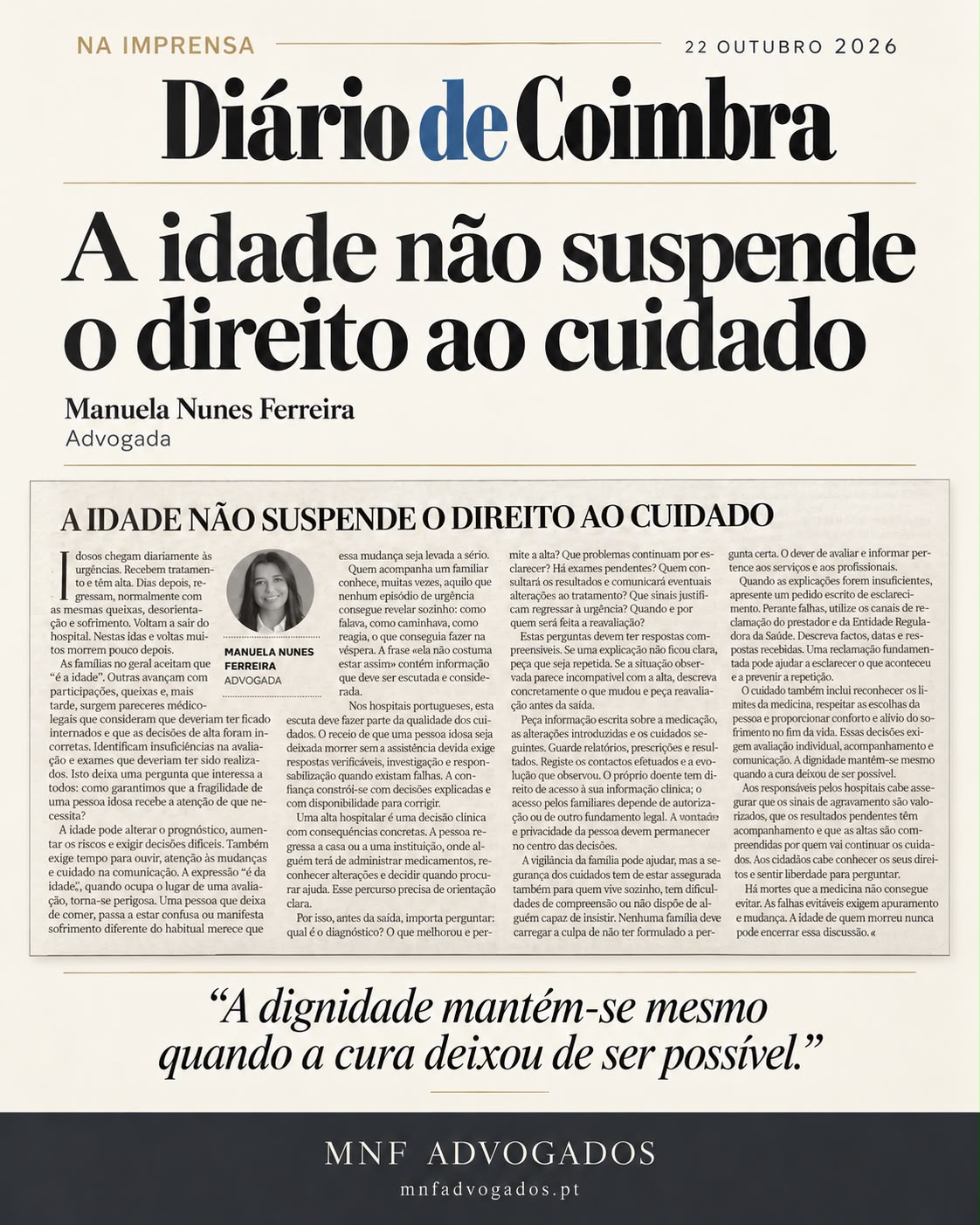
Finally, "Age Does Not Suspend the Right to Care" addresses hospital discharge for older patients and warns that confusion, loss of autonomy, or worsening of symptoms should not be dismissed as inevitable consequences of aging. The article recommends clarifying diagnosis, progression, pending tests, medication changes, and necessary care before discharge, providing accessible information to the patient and their family. It also recognizes the role of family support, without transferring responsibility for services to families, and affirms that dignity and the right to care remain even when cure is no longer possible.
Excerpts from publications